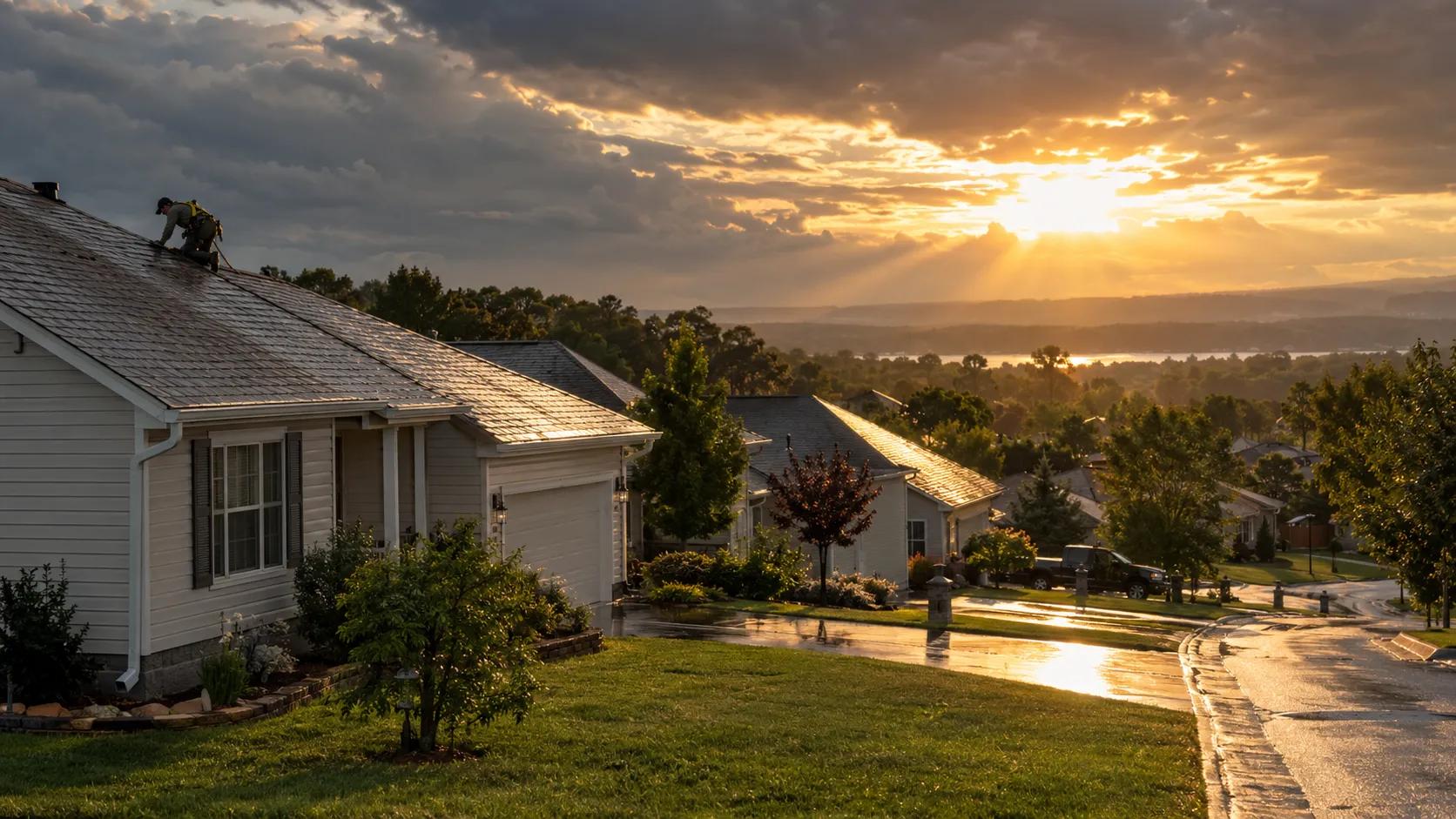
Need roof repair in Fort Worth?
Tell us about your roof and a local provider in our network can follow up. Request a callback to check provider availability, or send the estimate request.
No obligationA lot of people think a roof only needs help when water pours through the ceiling. In practice, the first signs are small: a faint stain, a lifted shingle, a musty attic. Those are the smartest moments to act, because the fix is usually smaller too.
Speakerseasy Roofing is a referral service. We do not do the roofing work. We connect homeowners in Fort Worth and the Fort Worth area with independent local roofing providers in our network. You describe the problem, a provider looks at it, and you get a written quote before anything starts. Request a callback to check provider availability, or send an estimate request and wait for a reply. There is no obligation to hire anyone, so you can compare your options at your own pace.
A lot of people think a small drip means a small problem. In practice, a drip is often the end of a long trip. Water may have been moving through the roof for weeks before it showed up inside.
Independent local roofing contractors in our network can look at it before it spreads.
Most emergency roof repair calls begin as one tiny stain. Catching it early usually means a smaller fix and a smaller bill. Request a callback to check provider availability, or send a request through the form.
Not always. Water runs along rafters and decking before it drops onto a ceiling. The wet spot inside can sit far from the hole outside. Watch for these signs:
Hot, humid summers and heavy downpours push water into every weak spot. Wet insulation holds moisture. Wood decking softens. Mold likes a warm, damp attic. Many homes in the Fort Worth area have attics that get very hot, and that heat dries out sealants and rubber parts sooner than you might expect.
Most repair visits fall into a few groups.
Wind lifts shingles. Metal flashing around chimneys, walls and valleys loosens or rusts. A provider can swap damaged pieces and reseal the edges.
The rubber collar around a plumbing vent cracks in the sun. It is a small part, yet it is a very common leak source.
After a tropical storm, storm damage repair may mean torn shingles, bent flashing or a hole from a fallen branch. Dated photos can help document damage for a claim. Some policies may cover sudden damage, so check your policy.
A good inspection often starts in the attic. The provider looks for wet wood, dark stains and light coming through. Then they check the roof surface, flashing and anything that pokes through the roof.
Some use a hose test. They spray one section at a time while someone watches inside. Ask what they found, and ask for photos.
Myth versus reality: a tarp is not a repair. It only buys time. From inside and the ground, you can:
Let a provider handle tarps and anything that needs a ladder.
It depends on the cause. A cracked pipe boot, once replaced, can last for years. A patch on an old, brittle roof may not hold as long. Ask the provider how long they expect the repair to last and what the written quote says about the work.
Many homeowners think repair is always the cheaper path. For one damaged spot, it usually is. But repeated leaks, widespread curling or heavy granule loss can mean the roof is near the end of its life.
If hail marks cover several slopes, hail damage roof replacement may come up. A provider can explain both options in writing so you can compare them side by side.
Single-story ranch homes have wide roofs and big, hot attics. That means heat wear and sometimes hidden moisture. Older pier-and-beam houses may have aging decking, so a provider may check the wood under the surface too.
Not all roofing contractors work the same way. Before you agree to anything, ask:
Prices vary by roof size, pitch, materials and how much wood is damaged. A written quote should name the materials, the work and the price. If two quotes differ a lot, compare what each one includes.
You do not need to know the exact problem. Describe what you see, and a provider can take it from there.
A provider looks for the real entry point of the water, not just the stain on the ceiling.
Lifted, cracked or missing shingles can be replaced and sealed.
Loose metal edges and cracked vent collars get resealed or swapped where water tends to sneak in.
You get the scope, materials and price on paper before work starts, so you can compare options calmly.
Repair prices depend on roof size, steepness, materials and how much wood is damaged. These are typical U.S. ranges only. Your own price may be higher or lower, so always ask for a written quote.
| Repair item | Typical range | Notes |
|---|---|---|
| Minor shingle repair | $150 – $500 | A few shingles replaced and sealed |
| Flashing repair | $200 – $800 | Chimney, wall or valley edges |
| Pipe boot or vent collar | $150 – $450 | Small part, frequent leak source |
| Leak inspection | $100 – $400 | Often folded into the repair price |
| Temporary tarp | $250 – $1,000 | Depends on roof size and access |
| Larger section repair | $1,000 – $3,500 | Includes damaged decking underneath |
Request a callback or send the request form. Tell us what you see, where, and when it started.
We match you with an independent local roofing provider in our network who serves your area.
The provider inspects the roof and puts the scope and price on paper.
Review the quote, ask questions and choose your next step with no pressure.
Skip the endless scrolling. Request a callback to check provider availability, or send an estimate request, and you can connect with an independent local provider.
We explain what drives repair costs so a quote makes sense.
Clear, friendly answers to roofing beliefs that can lead homeowners to wait too long.
Asking for an estimate does not commit you to hiring anyone.
Tell us about your roof and a local provider in our network can follow up. Request a callback to check provider availability, or send the estimate request.
No obligationLook for brown rings on ceilings, bubbling paint, a musty attic smell or daylight through the boards. Water often travels before it drops, so the stain may sit away from the actual hole. A provider can trace the true source.
For one damaged area, repair usually costs less. If leaks keep coming back or damage covers much of the roof, replacement may make more sense. Ask a provider to write up both options so you can compare.
Some policies may cover sudden damage, such as from a storm. Check your policy and call your insurer. Providers can often help document damage for a claim.
Tell us about your roof and a local provider in our network can follow up. Request a callback to check provider availability, or send the estimate request.
No obligation