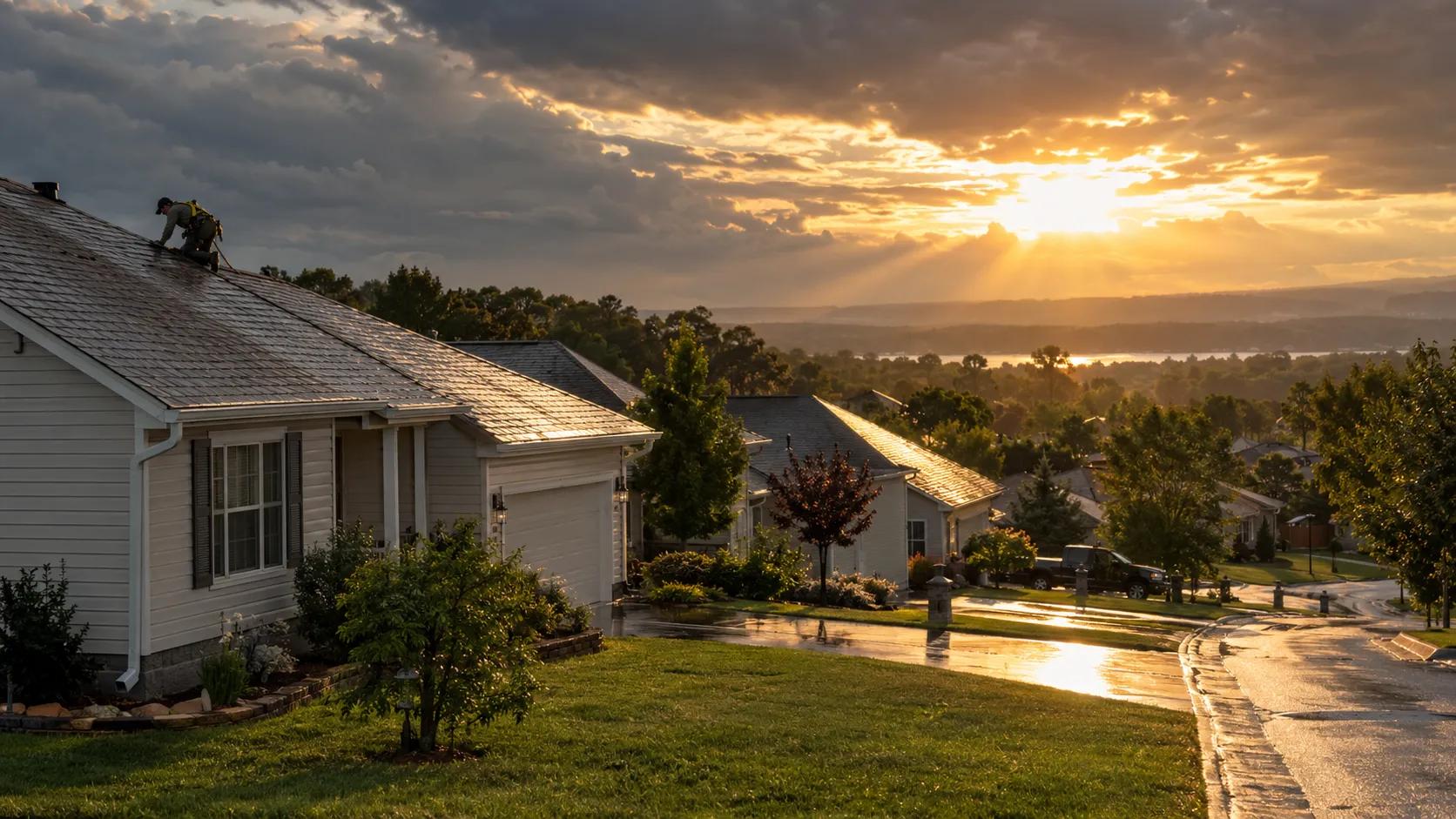
Need storm and hail damage roof repair in Fort Worth?
Tell us about your roof and a local provider in our network can follow up. Request a callback to check provider availability, or send the estimate request.
No obligationTalk to a local provider
Storm and hail damage on a roof is not always easy to spot. A lot of homeowners wait for a leak before they act. In practice, hail bruises and wind-lifted shingles can let water in long before a stain shows up on the ceiling. A local provider can check the roof, explain what the storm did, and put the plan in writing.
Speakerseasy Roofing is a referral service. We do not do the roofing work. We connect you with an independent local provider in our network who can inspect the damage and talk through repair or replacement. You get a written quote, a plain explanation of the price, and time to decide. The sooner the roof is looked at, the smaller the job tends to be.
A lot of people think they should climb up and check the roof right away. In practice, a wet roof after a storm is slippery and risky. Look from the yard instead. Binoculars help.
Keep clear of downed power lines. Stay out from under any ceiling that sags. Move items away from drips and set out a bucket. Take photos from a safe spot. These small steps protect your family and your home.
Here is the myth versus reality. Many people believe a roof is fine if the ceiling is dry. But hail can bruise shingles and knock off the granules that shield them. Wind can lift edges and break the seal.
Our summers are hot and humid, and storm season brings heavy downpours. A small opening can soak insulation and decking fast. Start while it's small. Smaller jobs are easier to schedule and usually cost less.
Emergency roof repair usually means a temporary fix to stop water coming in. Think tarps, sealed openings or patched flashing. It is a first step, not always the whole job.
Many providers can respond quickly, though availability varies. Request a callback to check provider availability in your area.
Storm damage repair starts with knowing what hit the roof. Here is what providers often find:
Often you can't. Hail damage can be small and spread out. On many ranch homes the roof is low, yet the marks still hide in the texture of the shingle.
Attics here get very hot, and heat-aged shingles can crack more easily when hit. Dented gutters, vents and siding are good clues. If those show dents, the roof deserves a closer look.
A good inspection is more than a quick walk. Expect the provider to check:
Some people think any storm means a new roof. Others think a patch always works. Reality sits in the middle.
A few damaged shingles on a young roof are usually a repair job. Hail damage across many slopes, or storm damage on an older roof, may point to hail damage roof replacement. Ask the provider to show you the damage and explain why. A fair answer comes with photos and a written quote.
Some policies may cover sudden damage, so check your policy. Look for your deductible. Some policies list a separate one for wind or hail.
Providers can often help document damage for a claim. That means clear photos and a written description of what they found. Your insurer makes the coverage decision, not the provider and not Speakerseasy Roofing.
After a big storm, people sometimes knock on doors and say they spotted damage. Some are honest. Some are not local and are gone by next season.
You don't have to decide on the porch. Take a card, check the business, and ask for a written quote. Local roofing contractors with a real address are easier to reach if a problem comes up later.
A few plain questions go a long way:
Quote in writing, every time. A spoken price can change. A written one lists the scope, the materials and the total, so you can compare offers side by side.
If one number is far from the others, ask what is different. The gap often comes down to scope, not just price.
You don't need to have it all figured out. Reach a local provider, get the roof looked at, and decide with facts in hand.
A provider checks shingles, flashing and the attic, then explains what the storm did in plain words.
Tarping or sealing openings can help keep rain out until repairs happen.
Cracked, lifted or missing shingles can often be replaced without touching the whole roof.
If hail has damaged many slopes, a provider can quote a full replacement in writing.
Prices vary by roof size, pitch, materials and how much damage there is. These are typical U.S. ranges, not quotes. A written quote from a local provider is the only way to know your number.
| Item | Typical range | Notes |
|---|---|---|
| Storm damage inspection | $150 – $500 | Often tied to an estimate |
| Emergency tarp or temporary seal | $300 – $1,500 | Depends on roof size and access |
| Minor shingle repair | $300 – $1,200 | A few damaged areas |
| Flashing or vent repair | $250 – $900 | Common leak spots |
| Decking patch | $400 – $1,500 | Needed if wood is wet or soft |
| Hail damage roof replacement | $7,000 – $20,000 | Asphalt shingles, average home |
Stay on the ground, avoid hazards, and take photos of what you can see from a safe spot.
Reach a local provider in our network and describe the storm and any leaks.
The provider checks the roof and attic, then walks you through what they found.
Compare scope, materials and price, check your policy, and choose how to move forward.
One request connects you with an independent local provider, so you spend less time hunting through listings.
We explain what drives price and clear up roofing myths so you can decide calmly.
Providers in our network know area weather, from heavy downpours to hot attics and tropical storm season.
Ask every provider for a written quote so you can compare scope, materials and total price.
Tell us about your roof and a local provider in our network can follow up. Request a callback to check provider availability, or send the estimate request.
No obligationLook for dented gutters, vents and siding, then ask a provider to inspect the roof. Hail marks on shingles can be small, so a close look from a roofer is the only reliable check.
If the roof is open or leaking, a temporary tarp can limit water damage until repairs are done. Don't climb up yourself. Ask a local provider to place it safely.
Some policies may cover sudden damage from wind or hail, but terms and deductibles differ. Check your policy. Providers can often help document damage for a claim, and your insurer decides coverage.
Tell us about your roof and a local provider in our network can follow up. Request a callback to check provider availability, or send the estimate request.
No obligation